
An AI course is useful only when it prepares you for a specific kind of work, such as data analysis, machine-learning engineering, automation, software development, or AI-enabled work in another field. By comparing job outcomes, prerequisites, practical tasks, and course quality, you can choose a realistic learning route instead of enrolling in a programme based only on the word “AI.”
Key takeaways
- Choose the target job before selecting an AI course.
- Match programming and mathematics requirements to your current level.
- Ask for demonstrable projects, deployment practice and portfolio evidence.
- Compare Pune courses by outcomes, mentor access and six-month workload.
Start With the Job You Want, Not the Course Name
Choose the job you want first; the required programming, mathematics, deployment, and business knowledge will determine the right course. Searching for ai job oriented courses for career goals in pune is useful only after you name that target.
| Role | Best-fit route | Main skills required |
|---|---|---|
| AI engineer | AI/ML or software development | Python, APIs, Git, cloud services, model integration |
| Machine-learning engineer | AI/ML | Statistics, linear algebra, model evaluation, deployment |
| Data scientist | Data Science | Python, SQL, probability, experimentation, predictive models |
| Data analyst | MIS or data analysis | Excel, SQL, Power BI or Tableau, business reporting |
| Business analyst | MIS | Requirements, process mapping, dashboards, domain knowledge |
| Automation developer | Python or software development | Scripting, APIs, testing, workflow design |
| Software developer | Software development | Programming logic, systems, testing, version control |
| AI-enabled domain role | Domain training plus applied AI | Forecasting, recommendation, catalog tagging, human review |
Choose MIS rather than neural networks if your goal is dashboards and reporting. Choose Python first if you need programming foundations; choose software development for applications that do not require machine learning. AI/ML or Data Science fits predictive modelling, while a machine-learning engineer needs deeper validation and production skills than a beginner data scientist.
An AI application builder must call APIs, manage code with Git, use cloud services, and integrate models into reliable software. Deep learning is not a shortcut: tensor programming, optimisation, loss functions, validation, and computing resources come later.
Creative, beauty, fashion, and vocational professionals can apply AI to forecasting, recommendations, tagging, or responsible generative-media work without becoming AI engineers.
Match the Learning Route to Your Starting Level
Your starting level determines the sequence. Do not begin with neural networks if you cannot yet manipulate data, write basic code, or explain a model’s result.
1. School students: begin with programming logic, spreadsheets, Python, and simple data handling. Add SQL after learning tables and formulas.
2. College students: practise Python, SQL, Git, and statistics alongside coursework, then build small analysis projects before studying machine learning.
3. Graduates and career changers: take the same foundation route, using structured projects to replace limited technical experience.
4. Working professionals: start with spreadsheets, SQL, Python, and domain data. Choose machine learning only after you can connect analysis to a business problem.
5. Learners without coding experience: learn variables, conditions, loops, functions, files, and debugging before pandas or model libraries.
6. After the foundation: study classical machine learning, including data cleaning, feature construction, baseline models, evaluation, and error analysis. Add deep learning or generative AI only when your target role requires it.
Basic statistics and probability support analysis, sampling, uncertainty, and model evaluation. Linear algebra and calculus become more important for advanced machine learning and neural networks. An ai course for students in pune should state these prerequisites clearly.
Deep learning is not a beginner shortcut: tensor programming, optimisation, loss functions, validation, and computing resources create debugging demands. Generative-AI preparation also requires embeddings, retrieval-augmented generation, structured outputs, evaluation datasets, token-cost and latency trade-offs, hallucination handling, and prompt-injection safeguards.
Check Whether the Course Teaches Work You Can Demonstrate
Job-ready means you can show working outputs, explain your decisions, and reproduce the result without a tutor beside you. Use this task-based test when comparing an ai ml course in pune:
1. Take a messy CSV, clean incorrect values, handle missing data, construct useful features, write SQL joins and aggregations, and build a dashboard. Complete the work in Python using pandas, NumPy, Jupyter, and Git.
2. Train a baseline machine-learning model, create separate training, validation, and untouched test sets, and choose metrics that fit the problem. Use cross-validation to estimate generalisation, then keep the final test set untouched; add error analysis and checks for data leakage.
3. Turn the model into an API or application interface. Look for repeatable environments, versioned code and data, logging, monitoring, and a response to model or data drift. A notebook that runs once is not a deployable project.
4. For a generative-AI or RAG project, test document retrieval separately from answer quality. Show sensible chunking, metadata, refusal when evidence is missing, and protection against prompt injection and other security failures.
Your portfolio project should state its problem, data source and licence, baseline, split strategy, chosen metric, limitations, error cases, and reproduction steps. A domain project for retail, beauty, fashion, or vocational work can beat a generic classifier if it proves these abilities.
Reject a course that shows only polished chatbot demos or training accuracy. Ask to see individual project reviews, Git-based work, and a practical assessment before enrolling.
Compare Pune Courses on Evidence, Not Advertising
Compare an AI career course in Pune against evidence you can inspect, not its keyword count. Request the syllabus, total learning hours, batch timetable, project list, internship structure, placement definitions, and tool access before paying.
Ask for proof of:
- Python, SQL, model evaluation, deployment, and portfolio-review depth
- Project count, originality, individual reviews, and Git-based submission
- Mentor access, live doubt support, assignment feedback turnaround, and practical final assessment
- Coding environments, cloud credits or compute access, and software supplied
- Placement cohorts, salary figures, employer tie-ups, and independently checkable outcomes
Score each course from zero to two:
| Criterion | 0 points | 1 point | 2 points |
|---|---|---|---|
| Prerequisites | Unstated | Basic outline | Entry test and bridge plan |
| Python and SQL | Missing | Lessons only | Graded, work-like tasks |
| Model evaluation | Names only | Metrics taught | Splits, leakage, error analysis |
| Deployment | None | Demonstration | API, Git, environment, monitoring |
| Portfolio review | None | Group review | Individual review and revision |
| Mentor access | Recorded content | Scheduled doubts | Live, documented support |
| Placement transparency | Percentages only | Partial cohort data | Roles, cohort and verification |
| Schedule fit | Fixed or unclear | Limited options | Timetable matches your availability |
Separate a certificate of attendance, course-completion certificate, assessed qualification, and employer-recognised credential. Verify the awarding body, assessment method, and recognition in the relevant regulator or qualification database.
For distance learning, test the practical-lab model, compute access, feedback turnaround, credible assessment, and deployable-project submission process. Pune’s technology reputation does not validate an institute’s claims; demand cohort definitions and evidence.
Choose the Course That Fits Your Next Six Months
Choose a single target role for the next six months, then enrol only if the course proves you can perform that role’s daily tasks. Use “ai job oriented courses for career goals in pune” as a comparison starting point, not as evidence that every advertised AI course fits you.
| Route | Choose it when | Work the course must prove |
|---|---|---|
| Python or software development | You lack coding logic or want to build applications | Python, APIs, Git, testing, debugging and a working application |
| MIS or data analysis | You want business reporting or analyst work | Excel, SQL joins, data cleaning, Power BI or Tableau dashboards and written insights |
| AI/ML or data science | You already handle Python, SQL and basic statistics | Feature engineering, model evaluation, error analysis, deployment and a documented project |
Use this enrolment check before paying:
- Write one target title, such as data analyst, automation developer or machine-learning engineer.
- List your current skills, including spreadsheets, SQL, Python, statistics and programming logic.
- Mark the missing prerequisites and reject any course that starts beyond them.
- Inspect project briefs. Reject a course whose projects do not produce the reports, dashboards, APIs or evaluated models your target role requires.
- Budget weekly hours for coding practice, assignments, revision, project work and interview preparation. Advertised course duration hides this workload.
- Confirm that batch times fit your job, college or family commitments.
An ai career course in pune deserves consideration only after this test. Compare IVTCE OPC Pvt. Ltd. with other Pune providers on assessments, mentor access, project review and placement evidence, using the same checklist for every institute. Choose verifiable work over the longest AI keyword list.
Related products
 | Aptech Learning - IT Programs This course offers a practical and theoretical foundation in Artificial Intelligence and Machine Learning, teaching students how to build intelligent... View product → |
 | Aptech Learning - IT Courses Master the science of extracting meaningful insights from data. View product → |
Frequently asked questions
How do I choose AI job-oriented courses for my career goals in Pune?
Start with the job you want, then compare each course’s programming, mathematics, deployment and business requirements with your current skills.
Which AI course in Pune fits a beginner?
Choose a route that teaches Python, data handling, basic statistics, model evaluation and guided projects before advanced machine learning topics.
What should students check before choosing an AI course in Pune?
Check the entry requirements, weekly workload, project scope, mentor support, assessment method and whether students can demonstrate their work.
How can I compare an AI career course in Pune?
Compare student portfolios, named tools, deployment practice, curriculum depth, instructor evidence, placement claims and the work you can complete within six months.
Related products
 | ZICA (Zee Institute of Creative Arts) Industry Ready Internship Programs Welcome to the Advanced Industry-Ready Career Program — a transformative initiative designed to bridge the gap between academic learning and... View product → |
 | Aptech Learning - IT Courses The MIS (Management Information System) course equips students with the technical and analytical skills needed to manage and analyze business data. View product → |
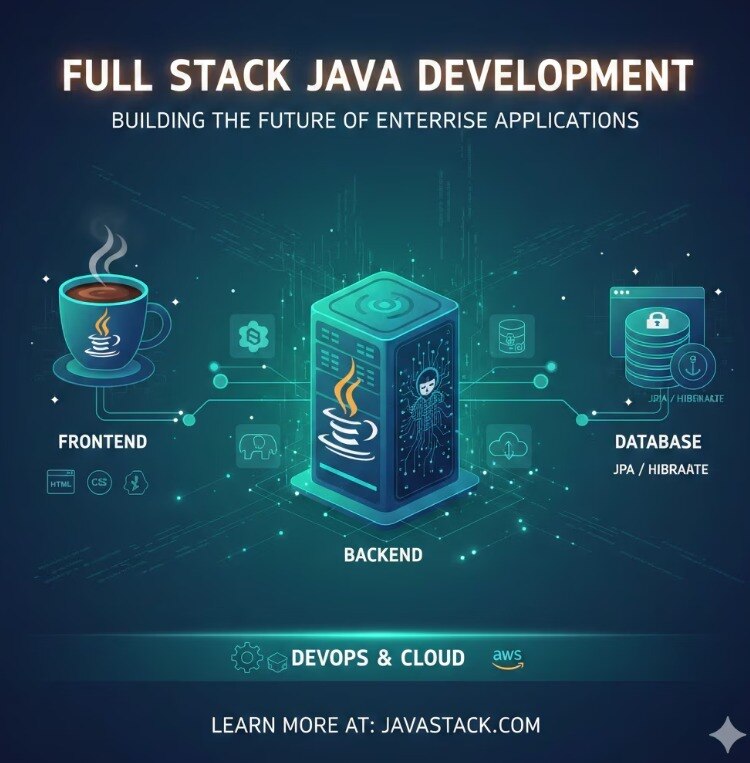
 | Aptech Learning - IT Courses 🚀 Launch of Full Stack Java Development Program – Become Industry Ready! We are excited to introduce our intensive Full Stack Java Development... View product → |
 | Aptech Learning - IT Courses PROGRAMMING ( JAVA, .NET, C, C++, C#) ( JAVA, .NET, C, C++, C#) A comprehensive course designed to build strong foundations in software development, logic building, and coding skills. View product → |